 0
0
 0
0
China’s New Energy Vehicle (NEV) industry has become the global leader in electric mobility, supported by strong government policies, advanced battery technologies, and a rapidly expanding EV ecosystem.
According to industry statistics, China produced and sold over 9.49 million new energy vehicles in 2023, accounting for more than 60% of global EV sales. This marks the ninth consecutive year that China has ranked as the world’s largest NEV market.
The country has also developed one of the most complete electric vehicle industrial chains in the world, covering battery technology, electric drive systems, intelligent driving, and charging infrastructure.
Table of Contents
- Overview of China’s NEV Industry
- Core Technologies Powering China’s EV Growth
- Leading Technical Teams and Innovation Centers
- Real-World Applications of Green Manufacturing
- Future Outlook for the Global EV Market
- FAQ: China’s Electric Vehicle Industry
Overview of China’s New Energy Vehicle Industry
China’s NEV sector includes three major categories:
- Battery Electric Vehicles (BEVs)
- Plug-in Hybrid Electric Vehicles (PHEVs)
- Fuel Cell Electric Vehicles (FCEVs)
Since the implementation of the Energy-Saving and New Energy Vehicle Development Plan in 2010, the industry has experienced rapid expansion.
The industry structure includes three major segments:
Upstream: Core EV Components
Key technologies include:
- Power batteries
- Electric motors
- Electronic control systems
These technologies are often called the “three-electric systems”, which form the technical foundation of electric vehicles.
Midstream: EV Manufacturing
Chinese automakers and technology companies have built large-scale manufacturing capabilities that now dominate global EV production.
Downstream: Infrastructure and Services
The supporting ecosystem includes:
- Public charging networks
- Battery swapping stations
- Smart vehicle connectivity platforms
Together, these elements create the world’s most complete EV industrial ecosystem.
Core Technologies Driving China’s Electric Vehicle Leadership
Power Battery Technology
Battery innovation plays a critical role in improving EV performance, safety, and cost efficiency.
Currently, two battery types dominate the Chinese market:
- Lithium Iron Phosphate (LFP) batteries
- Nickel Cobalt Manganese (NCM) batteries
CATL Qilin Battery
The CTP 3.0 Qilin Battery developed by CATL delivers major improvements:
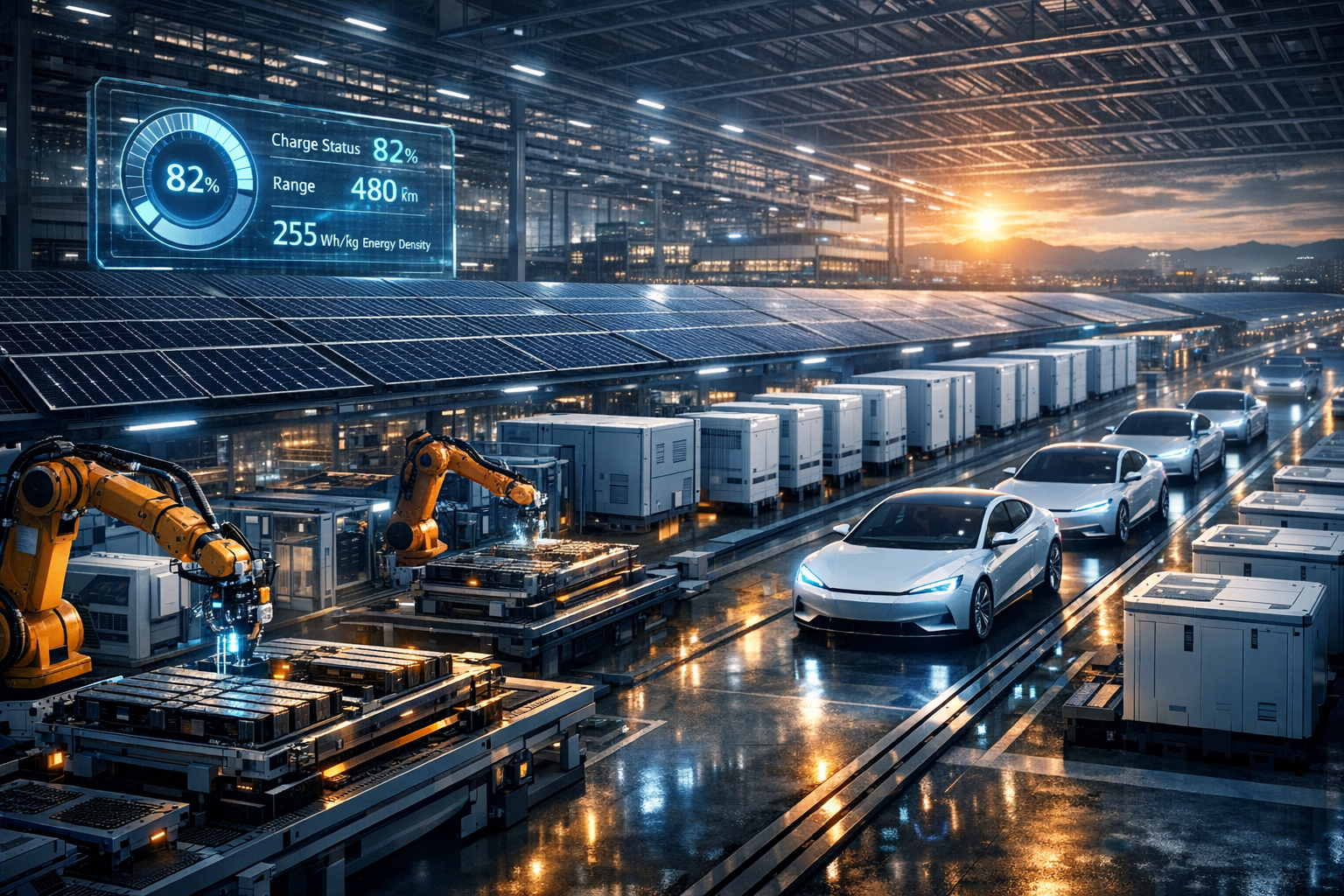
- Energy density up to 255 Wh/kg
- Ultra-fast charging capable of 400 km range in 10 minutes
BYD Blade Battery
BYD introduced the Blade Battery, designed for enhanced safety and efficiency.
Key advantages include:
- 50% higher space utilization
- Thermal runaway temperature exceeding 500°C
- Improved resistance to puncture and overheating
These innovations help improve both battery safety and driving range, which are crucial factors for EV adoption.
Electric Drive Systems
Advanced electric powertrains are making EVs more efficient and lightweight.
Huawei DriveONE Powertrain
Huawei’s integrated three-in-one electric drive system combines:
- Motor
- Electronic controller
- Reducer
This design achieves:
- 96.5% system efficiency
- 20% weight reduction
Automotive Semiconductor Innovation
Chinese companies such as Inovance have also developed automotive-grade IGBT power modules, reducing reliance on overseas semiconductor suppliers.
Intelligent Driving and Smart Vehicle Connectivity
Artificial intelligence and vehicle connectivity are transforming the EV driving experience.
XPeng XNGP Autonomous Driving System
XPeng’s XNGP driver assistance system combines:
- NVIDIA Orin-X computing chips
- LiDAR sensors
The system achieves a 90% success rate when navigating urban intersections.
NIO NOMI AI Smart Cockpit
NIO’s intelligent in-car assistant NOMI enables advanced human-vehicle interaction.
Statistics show that 75% of daily vehicle operations involve voice commands, demonstrating the growing importance of AI-powered vehicle interfaces.
Hydrogen Fuel Cell Technology
Hydrogen energy is becoming an alternative solution for heavy-duty transportation.
SinoHytec Fuel Cell Engine
SinoHytec developed a 120 kW hydrogen fuel cell system with impressive performance:
- Cold start capability at –30°C within 30 seconds
- Lifespan exceeding 20,000 hours
Fuel cell vehicles are particularly suitable for:
- Heavy trucks
- Commercial logistics vehicles
- Long-distance transport
Leading Technical Teams Behind China’s EV Innovation
CATL Research and Development Team
CATL operates one of the world’s largest EV battery R&D teams:
- 18,000 researchers
- 300+ PhD scientists
- 14,000 patents
The company also contributes to international power battery standards and continues developing sodium-ion batteries.
BYD Battery Research Institute
BYD’s research institute focuses on battery innovation and hybrid technology.
The team includes over 5,000 engineers led by battery expert Wang Chuanfu.
Their work has helped reduce LFP battery costs by around 60%, accelerating EV adoption worldwide.
Huawei Intelligent Automotive Division
Huawei’s automotive division includes more than 7,000 R&D engineers specializing in intelligent driving technology.
Its ADS 2.0 autonomous driving platform can update algorithms every two weeks, enabling rapid improvements in self-driving capabilities.
Real-World Applications of Green Manufacturing
CATL Yibin Battery Factory
The CATL Yibin facility integrates renewable energy directly into battery production.
Key infrastructure includes:
- 200 MW photovoltaic power system
- 100 MWh energy storage system
This setup provides 30% of the factory’s electricity and reduces carbon emissions by 120,000 tons annually.
BYD Xi’an Zero-Carbon Industrial Park
BYD’s Xi’an production base is designed as a green manufacturing facility.
Features include:
- 150 MW rooftop solar power
- Blade Battery energy storage
- Fully electrified logistics vehicles
In 2023, 45% of the factory’s energy consumption came from renewable sources, allowing the facility to achieve LEED v4 Gold certification.
Future Outlook for China’s Electric Vehicle Industry
China’s NEV industry continues to expand through:
- Breakthrough battery technologies
- Intelligent driving systems
- Hydrogen energy innovation
- Renewable energy manufacturing
With strong industrial integration and continuous technological progress, China is expected to remain the global leader in electric vehicles and sustainable transportation.
FAQ: China’s New Energy Vehicle Industry
Why is China leading the global EV market?
China benefits from strong government policies, a complete supply chain, large-scale manufacturing, and major investments in battery technology.
What is the most important technology in electric vehicles?
Power battery technology is considered the most critical component because it determines range, safety, and charging speed.
Which Chinese companies lead the EV battery market?
Companies such as CATL and BYD are among the largest EV battery manufacturers in the world.
Are hydrogen fuel cell vehicles replacing EVs?
Hydrogen vehicles are mainly used for commercial transport and heavy trucks, while battery electric vehicles dominate the passenger car market.
Disclaimer: The article does not constitute financial, investment, or trading advice. It is recommended that readers consult with qualified financial advisors, conduct thorough due diligence, and consider their individual financial circumstances and risk tolerance before making any investment choices.
