 0
0
 0
0
Palo Alto, CA – March 5, 2026 – Tesla CEO Elon Musk has publicly asserted that the electric vehicle giant will play a pivotal role in the creation of Artificial General Intelligence (AGI), potentially becoming the first entity to realize it in a humanoid or “atom-shaping” configuration. This bold prediction underscores Tesla’s expanding ambitions beyond automotive manufacturing into advanced robotics and AI.
In a recent post on social media platform X, Musk stated: “Tesla will be one of the companies to make AGI and probably the first to make it in humanoid/atom-shaping form.” The term AGI refers to AI systems capable of understanding, learning, and performing any intellectual task that a human being can, across diverse domains, rather than being confined to specialized functions. Musk’s reference to “humanoid/atom-shaping form” appears to allude to Tesla’s Optimus robot, which could manipulate physical matter at an atomic level through advanced capabilities.
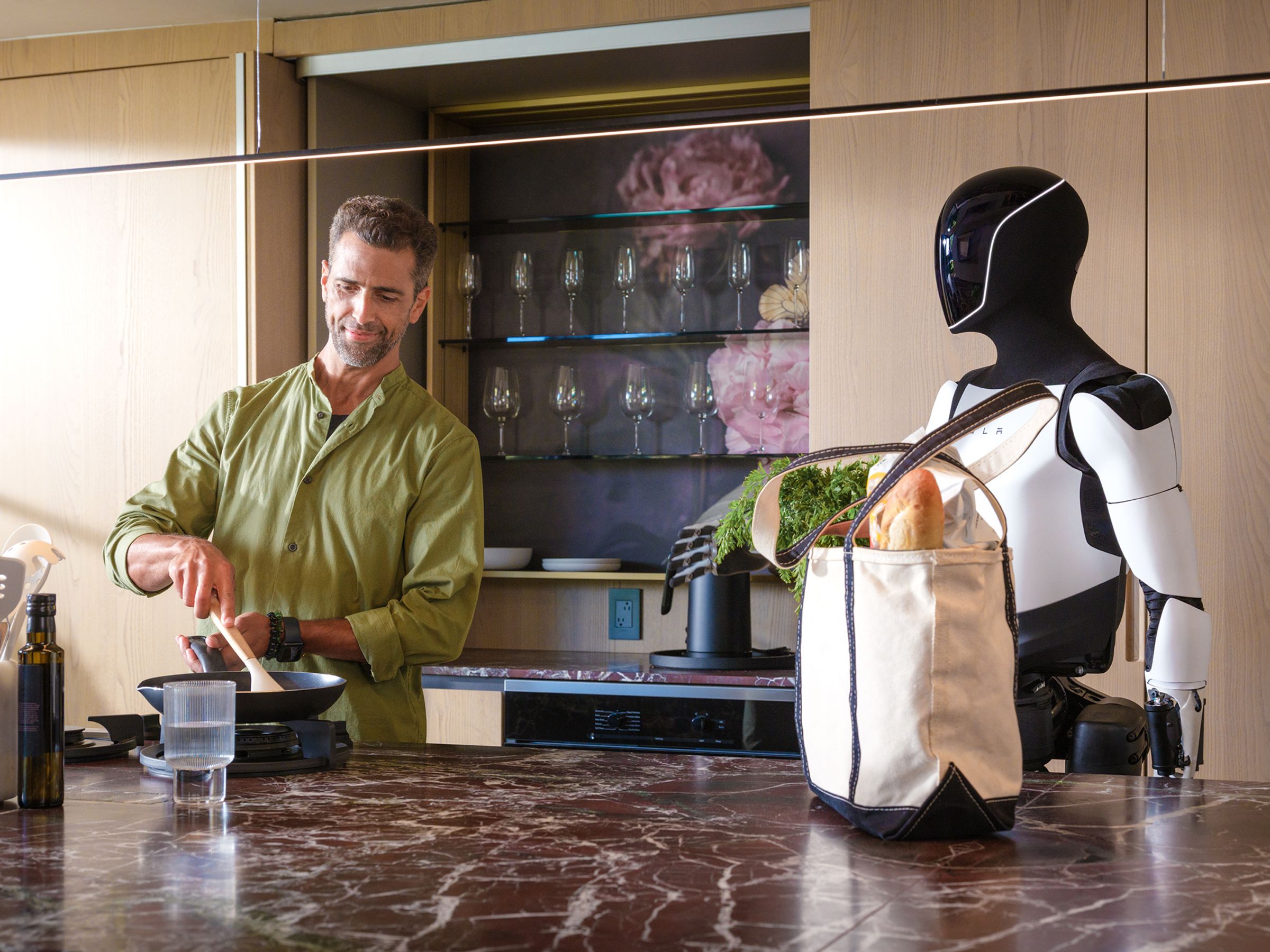
Tesla’s foray into humanoid robotics began with the unveiling of Optimus, also known as the Tesla Bot, at the company’s AI Day event in August 2021. Designed as a general-purpose, bipedal autonomous robot, Optimus aims to handle tasks that are unsafe, repetitive, or tedious for humans, such as factory work or household chores. The latest iteration, Optimus Gen 2, features Tesla-engineered actuators, sensors, enhanced hand dexterity, faster locomotion, reduced weight, and an articulated neck for improved mobility. Demonstrations have shown the robot performing actions like walking, object sorting, and even folding clothes.
Musk attributes Tesla’s edge in achieving embodied AGI to the company’s vast repository of real-world data from millions of miles of autonomous driving via its Full Self-Driving (FSD) system, combined with in-factory training environments. He has previously suggested that AGI could emerge as a natural byproduct of Tesla’s work on autonomous vehicles and humanoids, processing “messy, real-world data” at scale. This data flywheel, powered by Tesla’s Dojo supercomputer, positions the company to integrate advanced AI models into physical systems like Optimus.
Looking ahead, Tesla plans to unveil Optimus Gen 3 in the first quarter of 2026 and has begun repurposing production lines at its Fremont factory—previously used for Model S and Model X vehicles—to manufacture the robots. The company aims to produce up to one million units annually, with potential applications extending to self-replicating systems akin to von Neumann probes, theoretical machines that could harvest planetary resources for replication and exploration.
However, Musk’s proclamation has drawn skepticism, given his history of optimistic timelines for AI advancements. Critics point out that while Tesla advances in robotics, Musk’s separate venture, xAI, has been diverting AI talent and resources from Tesla, raising questions about whether the AGI for Optimus will be developed in-house or through external partnerships. xAI has reportedly informed investors of plans to build AI specifically for Tesla’s humanoid program, potentially blurring the lines between the two entities.
Despite these concerns, Musk remains confident, emphasizing that solving real-world AI for Optimus will be exponentially more challenging than for vehicles but could lead to transformative outcomes. As Tesla continues to deploy autonomy at scale, the integration of AGI into humanoid forms could redefine industries, from manufacturing to space exploration.
This development aligns with broader industry trends, where companies like OpenAI and others race toward AGI, but Tesla’s focus on physical embodiment sets it apart. Observers will watch closely as Tesla’s robotics roadmap unfolds in the coming months.

