 0
0
 0
0
Industry Overview: From Prototype to Mass Commercialization
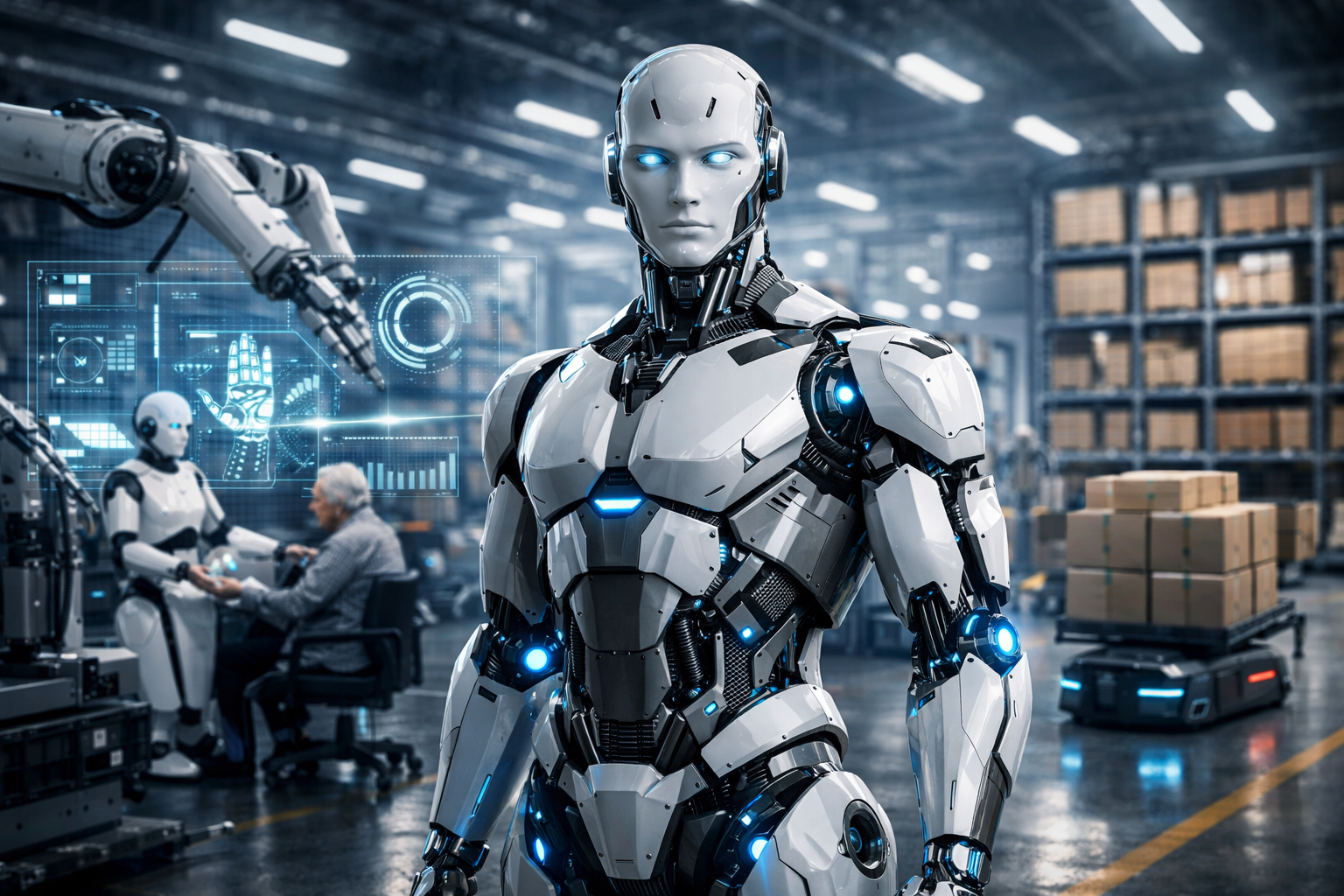
Humanoid robots are intelligent machines designed to mimic human form and behavior. Unlike traditional industrial robots, they combine perception, reasoning, and physical execution to operate in complex, human-centric environments.
Historical Milestones
- WABOT-1 (Japan, 1973): One of the world’s first full-scale humanoid robots
- ASIMO (2000): Advanced mobility and public demonstrations
- Xianxingzhe (China, 2000): China’s early breakthrough in humanoid development
These early prototypes paved the way for today’s AI-powered physical agents.
Market Growth & Scale
- Global shipments (2025): ~18,000 units
- China’s dominance: 140+ manufacturers and 330+ humanoid models
- Market size projection (2030): Exceeding $6.72 billion
The expansion is fueled by labor shortages, rising labor costs, and increasing demand for flexible automation systems.
Policy Support
China’s Guidance on Innovative Development of Humanoid Robots (2023) sets clear goals:
- Mass production targets by 2025
- Robust domestic supply chain by 2027
This policy backing significantly lowers commercialization barriers.
Core Technologies Powering Humanoid Robots
Modern humanoid robots are built on a “Brain–Body–Limb” architecture integrating hardware engineering and AI intelligence.
1. Mechanical Design & Bionic Systems
Dynamic Mobility
Advanced humanoids now feature:
- Lightweight frames (50–120 kgs)
- High-torque motors (up to 360 N·m joints)
- Running speeds up to 12 km/h
- Backflips and complex terrain navigation
For example, H1 from Unitree Robotics demonstrates high agility at competitive pricing ($30,000–$100,000).
Bionic Interaction
- 30+ micro-actuators for facial micro-expressions
- Advanced voice modulation systems
- Reduced “uncanny valley” effects
These innovations enhance emotional realism and human acceptance.
2. Critical Components Market
Actuators & Sensors
- Harmonic reducers
- Linear & rotary actuators
- 6-axis force sensors
- 360° perception modules
The global core component market already exceeds $280 million, with domestic production covering approximately 65% of key parts.
Battery Technology
Operational limits (2–6 hours) remain a bottleneck. Solid-state battery solutions, such as GoMate from GAC Group, aim to extend runtime to 6 hours and beyond.
3. Motion Control & AI Integration
Whole-Body Coordination
Reinforcement learning and Vision-Language-Action (VLA) models enable:
- Tool usage
- Multi-step assembly
- Warehouse logistics
- Adaptive manipulation
Edge Computing
Embedded chips such as Orin-X from NVIDIA allow real-time obstacle avoidance and decision-making without cloud dependency.
4. Perception & Human–Robot Interaction
- LiDAR systems
- Thermal imaging
- Tactile skin sensors
- Conversational AI (e.g., GPT-4 from OpenAI)
These technologies enable natural dialogue, emotional recognition, and environmental awareness.
Leading Humanoid Robot Companies in 2026
1. Unitree Robotics – Agile Motion Systems
- H1 humanoid robot
- 3.3 m/s sprint speed
- Competitive pricing model
- Strong consumer and enterprise interest
2. UBTech Robotics – Industrial Automation
- Walker S Series deployment
- Applied in automotive factories
- Focus on precision assembly and quality inspection
3. Agibot – General-Purpose Platforms
- Faraway A3 logistics robot
- 5,100+ units shipped in 2025
- Focus on warehouse automation
4. Soulbot – Elderly Care & Emotional AI
- Companion robots
- 30% adoption in select senior communities
- Emotional AI integration
Real-World Application Case Studies
Case 1: UBTech Walker S in Automotive Manufacturing
Deployment: BYD Changsha plant
Function: Parts transportation, welding, and inspection
Using 0.1mm precision multi-joint arms, Walker S robots reduced human error by 40%.
Impact:
- 24/7 continuous production
- 15% faster production cycles
- $2.8M annual cost savings
Case 2: Soulbot in Elderly Care
Deployment: Shanghai nursing homes
Function: Emotional support, reminders, conversation
Impact:
- 70% reduction in non-critical staff workload
- 89% resident satisfaction
Case 3: Unitree H1 at CES 2026
At CES 2026, H1 demonstrated parkour, object handling, and wall-climbing abilities.
Impact:
- Viral social media traction
- $1.2B brand valuation increase
Market Projections & Industry Challenges
Growth Drivers
- Aging population (China’s elderly projected >30% by 2035)
- Industrial labor shortages
- AI advancement (LLMs + robotics integration)
- Smart manufacturing upgrades
Key Bottlenecks
- High R&D cost: $250K–$350K per unit
- Limited real-world training data
- Ethical concerns (job displacement)
- Battery endurance constraints
Future Outlook: Are Humanoid Robots the Next Industrial Revolution?
Humanoid robots are positioned at the intersection of AI, advanced manufacturing, and demographic necessity. As costs decline and AI models improve physical reasoning capabilities, we are likely to see:
- Wider adoption in factories
- Growth in healthcare and service industries
- Emergence of humanoid robots as general-purpose labor solutions
The next five years will determine whether humanoid robots follow the smartphone adoption curve — or remain niche industrial tools.
Disclaimer: The article does not constitute financial, investment, or trading advice. It is recommended that readers consult with qualified financial advisors, conduct thorough due diligence, and consider their individual financial circumstances and risk tolerance before making any investment choices.
